Portfolio governance
Intake discipline, portfolio baselines, lifecycle states, sequencing, signal recovery, and tradeoff visibility.
Methods
Client-safe walkthroughs and reusable modules for PMO and portfolio leaders who want to see how ambiguous work becomes owned, reviewable, and easier to act on.
For PMO and portfolio leaders
Use walkthroughs to follow one decision at a time, from intake through value follow-through. Use modules to inspect reusable proof-of-concept structures for the same work. Together, they make the approach visible without exposing private records.
Walkthroughs show the operating pattern; modules show reusable starting points. Both let readers inspect the structure without needing private records.
Walkthroughs
Intake discipline, portfolio baselines, lifecycle states, sequencing, signal recovery, and tradeoff visibility.
Structured review, stakeholder alignment, executive cadence, readiness evidence, and owner follow-up.
Business-value allocation, proof requirements, human review gates, reliance boundaries, and adoption discipline for AI-assisted workflow artifacts.
Qualification logic, readiness evidence, governance cadence, controls, escalation paths, and external delivery follow-through.
UAT evidence, launch criteria, blocker visibility, control exposure, exception review, signoffs, and audit-aware follow-through.
Evidence quality, assumptions, proof gaps, review paths, and how examples become credible public portfolio material.
Walkthroughs
These walkthroughs give readers more than a claim without forcing a full repository tour. Each one explains the business problem, the review path, the evidence created, and the supporting sources.
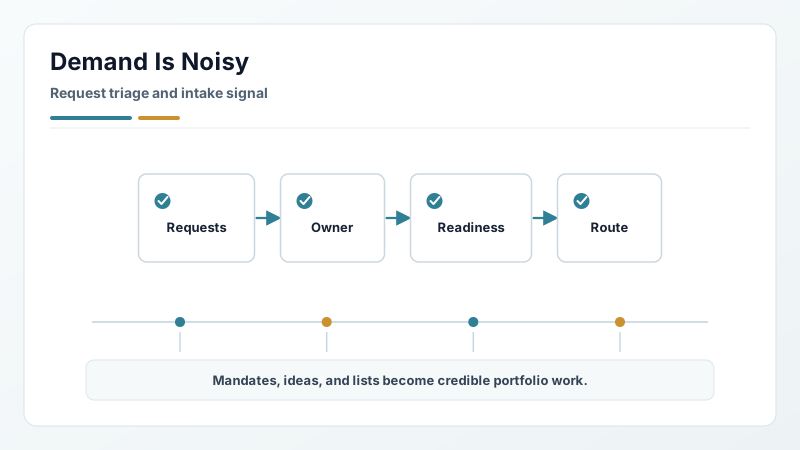 Intake and signal
Turns rough requests, mandates, ideas, and initiative lists into owned, routed, and decision-ready portfolio work.
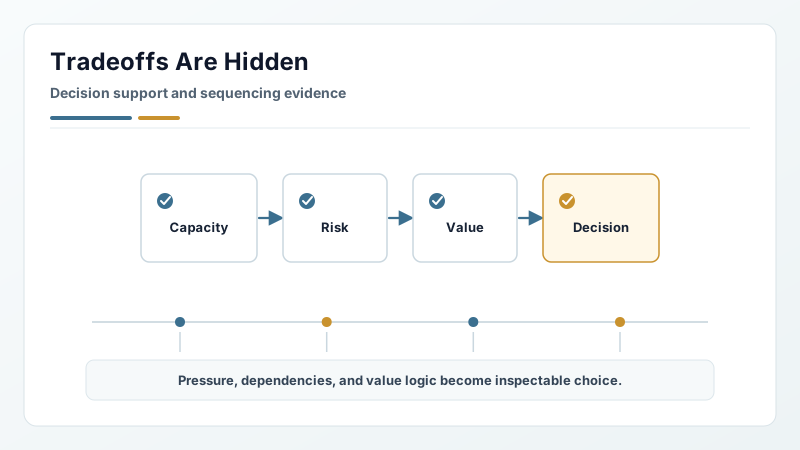 Tradeoffs
Shows how scoring, capacity pressure, dependency visibility, and sequencing choices become leadership-ready decision material.
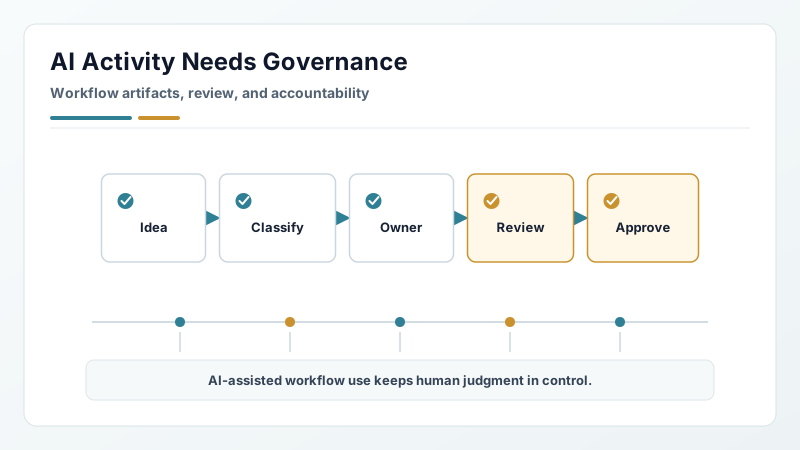 AI workflow governance
Routes AI-assisted workflow ideas and generated artifacts through value review, ownership, reliance boundaries, human review, and approval gates.
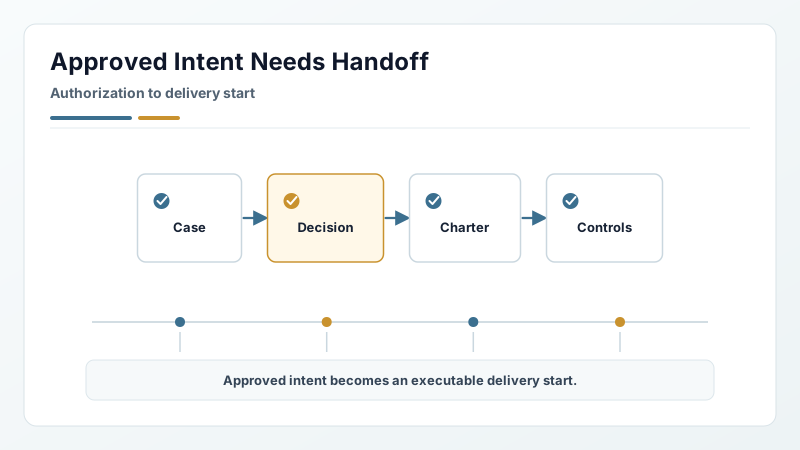 Authorization
Moves approved intent into business-case logic, charter structure, ownership, assumptions, risk, and delivery handoff.
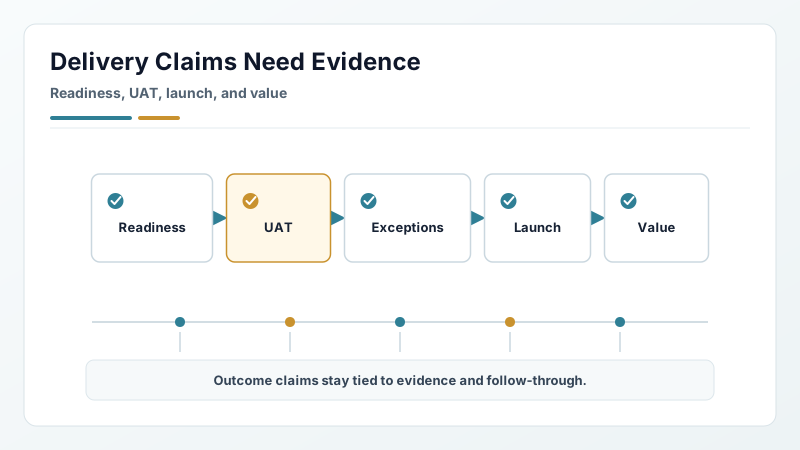 Readiness and value
Connects blockers, UAT evidence, launch criteria, controls, signoffs, benefits, and value confidence into a reviewable chain.
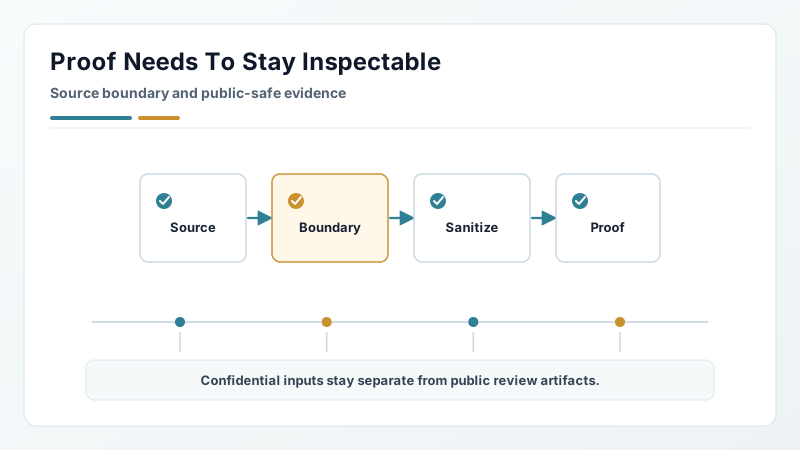 Evidence integrity
Explains how generalized artifacts can show judgment while protecting client systems, procedures, and identifying context.
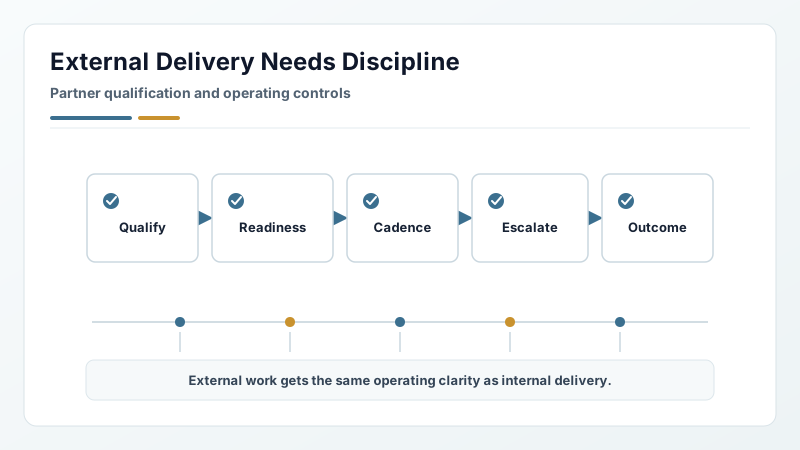 External delivery
Shows qualification, readiness, escalation, evidence, and follow-through for partner and external delivery environments.
Inspection path
The walkthroughs show how I frame work, name decision points, structure accountability, protect evidence quality, and keep public examples separate from client operating procedures.
Next sections
The walkthroughs show how judgment is applied. The module library packages parts of that logic into reusable structures and starting points for recurring work.